


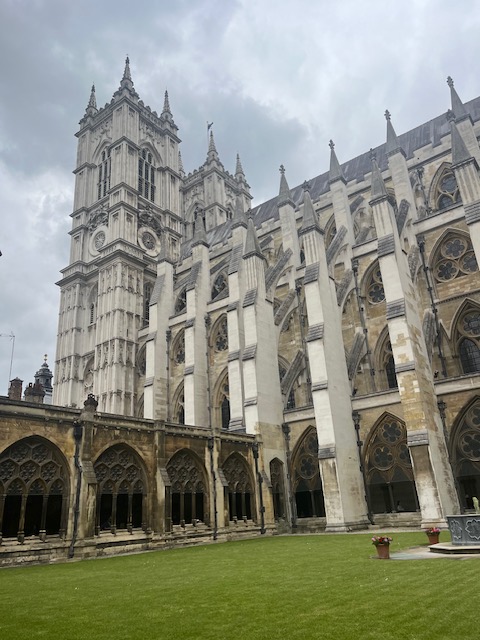


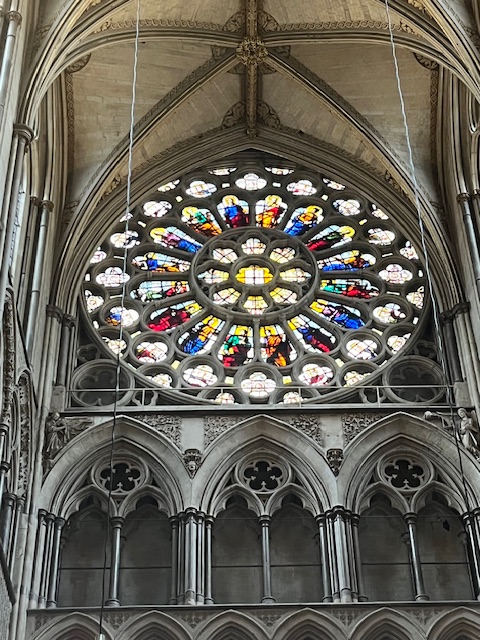
Well that was the coolest fact I learned today. Was that one of the oldest rooms in Westminster Abbey stored some beer the Monks would make when they resided there. Sounds lit. Now to talk about the famous dead…
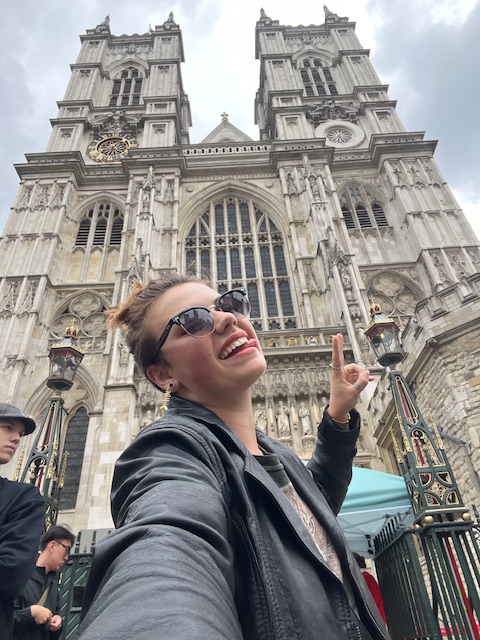

There were so many memorials of people who contributed greatly to the world at Westminster Abbey. Isaac Newton, Stephen Hawking, Charles Darwin, Michael Faraday, Henry Wadsworth Longfellow, Lewis Carroll, Robert Browning, C.S. Lewis, Lord Byron, William Shakespeare, and Sir Henry Irving to name a few. But I was extremely excited to write about Jane Austen, Dylan Thomas, and Charles Dickens today.
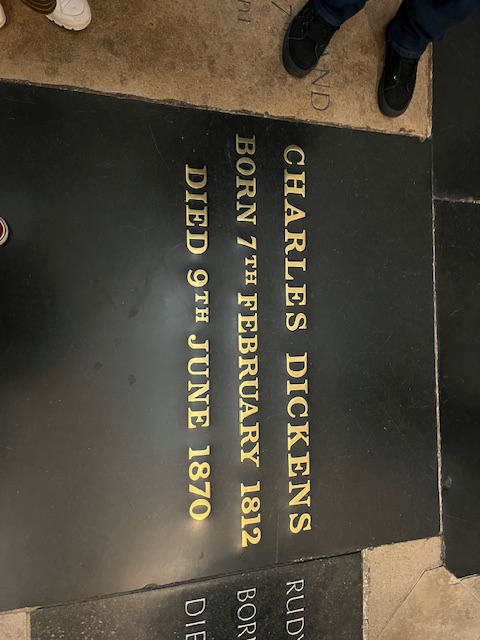
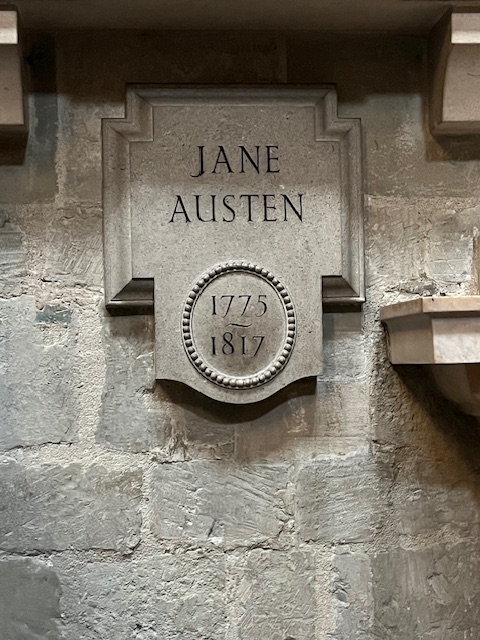
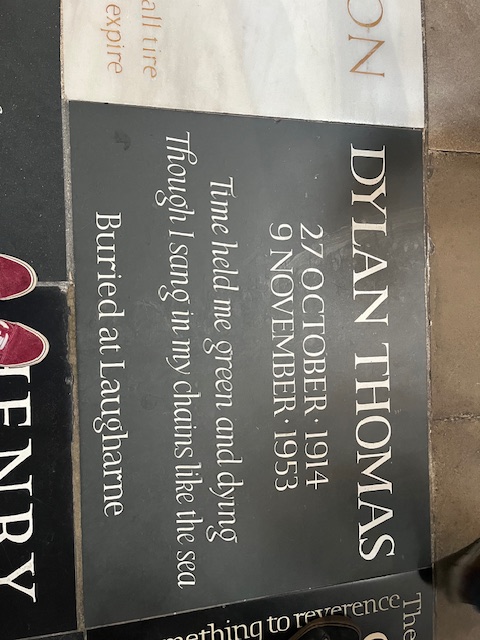
Jane Austen
I’ve read the works of Jane Austen including the spin-off called Pride and Prejudice and Zombies. (Which is actually my favorite, sorry Jane.). Jane Austen had an amazing and accomplished life. She deserved a more elaborate memorial like her male counterparts received at Westminster. Hers looked begrudging compared to the others.
Jane Austen was born in 1775 and died in 1817. She was an English writer who wrote about love, realism, society, class, and reputation. Austen was versatile and wrote in comedic, gothic, and romantic styles. She distinctly depicted the life of the middle class of the 19th century. Austen was bold to be a female writer in her time. She did not use a pen name but did publish her novels unanimously, all signed “By a Lady”. Her only sister Cassandra did watercolor illustrations for her novels while her brothers helped supply her funds to publish. Her family was lively and warm. Her family supported each other a lot. Her father was a clergyman and school headmaster. He educated Jane Austen, having her read novels from the abundance of books in their collection.
Austen went her own way in life and lived what she wrote. Even using her own life, family, and lived experiences as inspiration for her work. In 1802, she received a proposal for marriage by the heir of the Hampshire fortune. It is said that she was either so shocked or nervous that she accepted, but after being given the time to think it over she refused him the next morning and left with her sister. It was very scandalous then, but she didn’t look back.
Dylan Thomas
I’m not going to lie, I was extremely excited to see Dylan Thomas’s memorial at Westminster. I have heard of and read a few of his poems, which are extremely interesting to read with their distinct imagery, tones, and distinct tension that hold real originality. My favorite works of Dylan Thomas are Fern Hill, Love in the Asylum, and Do Not Go Gentle Into That Good Night. However, his mention in Taylor Swift’s Tortured Poets Department album made me curious to research his life.
Dylan Thomas was a Welsh poet, born in 1914 and died in 1953. He was a tortured poet with a few psychological breakdowns in his life that he refused to seek help for. His outlets in his life consisted of his work and alcoholism. Dylan Thomas’s poems had subjects of life, death, decay, nature, sex, desire, love, and grief. Dylan Thomas struggled financially most of his life. Making famous friends while in Oxford, he was able to stay afloat but stressed. His wife financed a cottage for them to live in while he commuted to London. The commute made him weary and upset. Dylan Thomas wished to immigrate to America several times as he loved it very much. In New York at the renowned Chelsea Hotel, he finished his play Under Milk Wood several hours before it was to be performed onstage. While touring in America, it is said that many took pleasure in getting Mr. Thomas seriously drunk. It seemed to be a coping mechanism for his persistent despair and jeopardized marriage. He was having difficulty breathing when he slipped into a short coma and died of what we presume to be pneumonia and alcohol poisoning. He died while living in apartment 205 of the Chelsea Hotel, far from his Welsh home.
Charles Dickens
Dickens can be considered the greatest novelist of the Victorian Era. A bold claim, I know, but he is renowned throughout literature with little else to challenge. Dickens lived from 1812 to 1870. I am excited to read my vintage copy of Our Mutual Friend I picked up in Greenwich Market. Several of his other works are referenced constantly, such as A Christmas Carol, Bleak House, and Oliver Twist. I also personally loved Great Expectations and A Tale of Two Cities. His works continued to be retold and reworked as we saw in the production of London Tide. There is a show on Disney + called The Artful Dodger, which is a must-watch and tells the sad aftermath of Oliver Twist for the character Dodger.
Dickens masterfully found compelling ways to criticize societal practices and their harmful effects. His stories tended to tie themselves into pretty bows in the end. Villains met grueling ends and protagonists found their justice after strife. Fun fact, Charles Dickson is the one who coined the term “cliffhanger”. Dickens used inspiration from the tribulations of his own life. At a very young age, he was forced to leave school to work in a factory while his father was locked in a debtor’s prison. He eventually was able to make his way back to school where he belonged. He wrote his way out to a better life. Charles Dickens fought for philanthropy, social reform, and education. He was persistent and active in writing non-fiction articles and papers as well as his thematic works of fiction.
 Theatre in London U of A