Two theatre shows, both alike in spectacle in fair West End where we lay our scene. From fantastic acting to minimalist design where civil words make wild choices unclean.
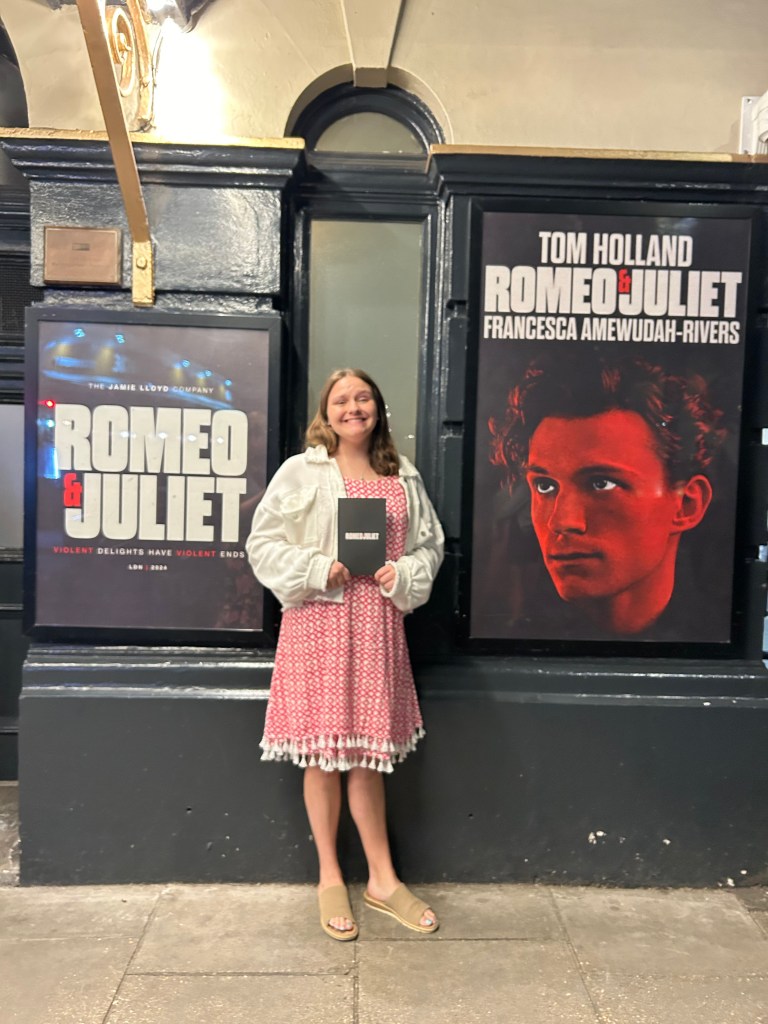
As all of you probably know, I had the absolute pleasure and fortune of seeing Tom Holland act as Romeo in Romeo and Juliet by William Shakespeare at the Duke of York Theatre. I think it is safe to say that my life has changed forever after that performance. When I saw London Tide I thought “this is the most interesting, minimalist set I have ever seen and I have never seen theatre this unique!” However, after witnessing this show all I can think is “THIS is the most interesting, minimalist set I have ever seen and I have never seen theatre this unique.” In order to talk about everything I can remember I’ll weave in and out talking about the story and the little moments that made it so great. Now you, with patient ears, attend!
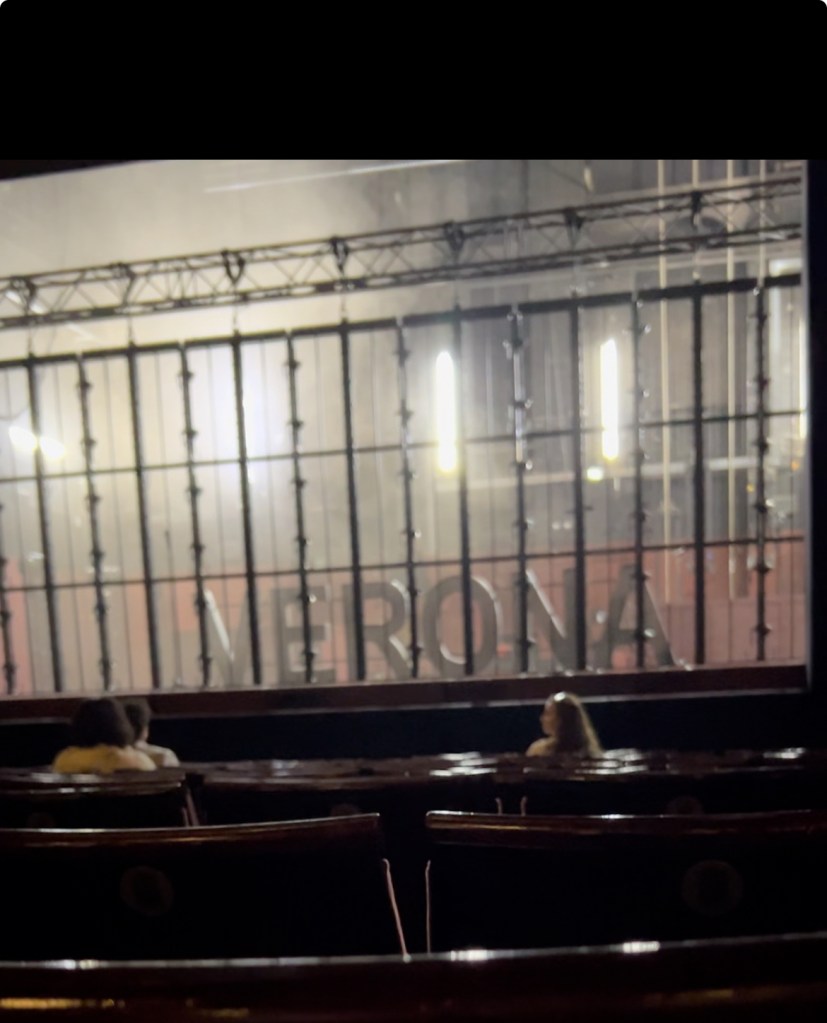
I arrived at the theatre 40 minutes early (of course) and while I was in the loo, the preshow music (if you can call it that) started blaring over the speakers. It was a cacophony of scratchy sounds and EDM music that filled the air with uneasy tension. When I got to my seat I watched the fire curtain rise to reveal a mostly empty stage floor with large bulb-light letters spelling VERONA and a mesh-like, see-through screen in front of them. There were no legs, no borders, no cyc, and no lighting on the stage aside from an occasional row of lighting bars. I could see absolutely everything, from the crew in their positions on the fly rail, to the bricks that made up the actual walls of the theatre itself. This awareness of the stage faded away during the permanence because the stage was completely dark, but everything was visible at the start.
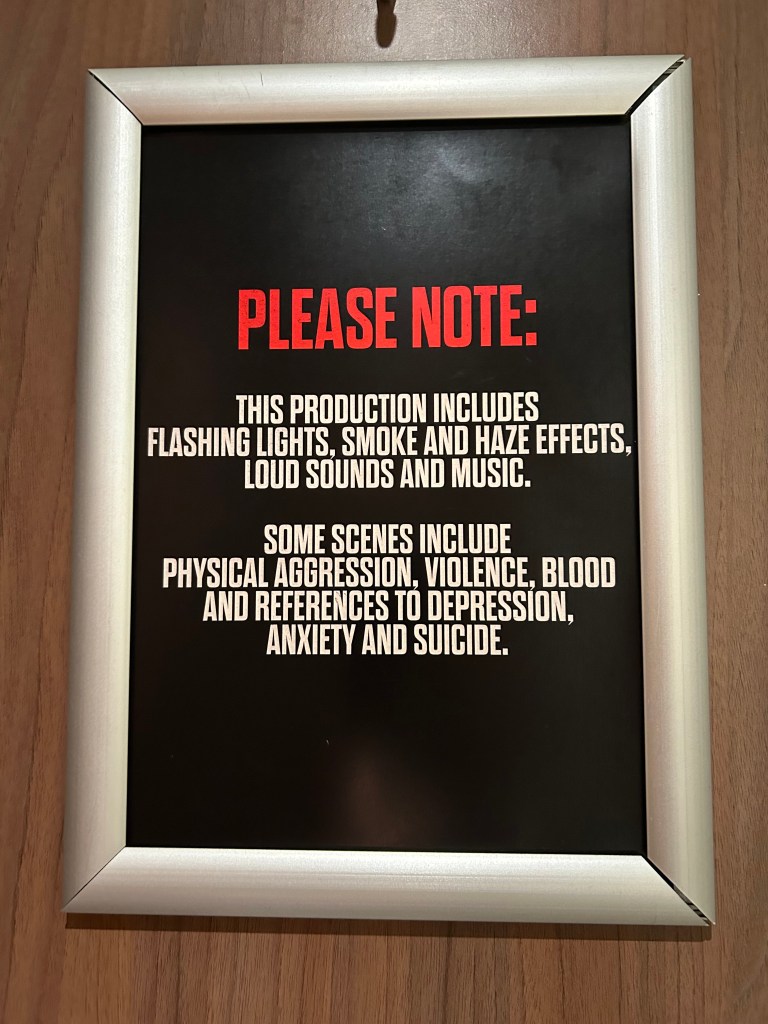
When the show began, the room was plunged into darkness and the screen revealed an extreme close-up of the narrator Michael Balogun who also portrayed Friar as he softly spoke the prologue to the audience. The screen was capturing a live feed of the actor who was standing behind it being filmed on stage by a cameraman. There were several instances of this technique being used and each time it happened I got chills. When the screen started to rise, the video feed cut and the first scene between the Capulet and the Montage began with the two actors whispering into standing mics facing the audience. It looked like a staged reading but it felt like my soul was being held at gunpoint because as they were quietly speaking I could feel the tension in the air. When they said all they needed, the lights went crazy and flashbanged the audience three times as the loudest, most abrasive noises possible emanated from the speakers. I honestly thought I was going to die for a second. When my eyes and ears stopped being harassed, the stage lights came back up, but the actors all exited while a stage manager crossed to center stage and told the audience the show would have to pause for a moment.
“I can never tell if this is part of the show,” I said to F1 driver Lewis Hamilton’s wife. She did not reply. Apparently it wasn’t part of the show because the house lights went up and the fire curtain to the stage closed. Luckily, it didn’t take long for the show to resume, but unluckily they decided to take the show back to before the flashbang scene so I got to be visually harassed a second time. Even when I was expecting it, it still caught me off guard. The show continued on with actors having moments of close-up camera work (mainly when being introduced) and interacting with each other. I noticed that the only time the standing microphones were used was when a Capulet and a Montague have a scene together and the only time the characters look at and interact with each other is when each family is with their respective kin. However, Romeo and Juliet break these rules and directly interact in every scene after they meet.
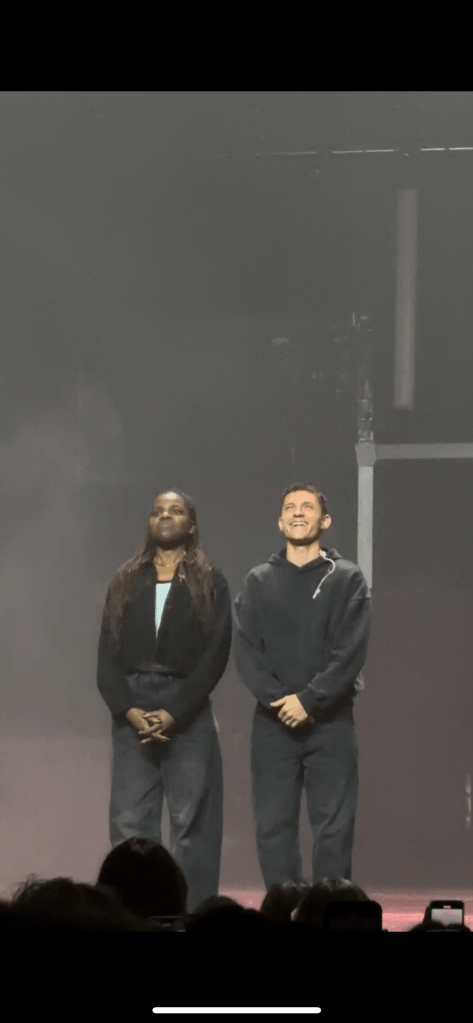
When we are first introduced to Tom- I mean Romeo, he sits on the ledge of the stage and accidentally pushes his hand into a pool of blood. It is my belief that the crazy lighting fight at the start of the play represented a real battle between a Captulet and a Montague that ended in bloodshed. Romeo contemplates this with Mercutio as he sees his blood-stained hand. Then we finally get to the party scene and meet the wonderful Francesca Amewudah-Rivers as Juliet! Every actor is wearing black athletic clothes, but I noticed that the higher classes were wearing higher-end athletic clothes such as Juliet in a nice adidas jacket and black pumps while the nurse wore a black tee shirt and leggings. Also, When Romeo and Juliet meet they reveal white shirts underneath their black jackets. After the balcony scene, Romeo takes his black jacket completely off and reveals Tom Holland’s absolutely toned muscles, but I digress.
I noticed that when they are showing other locations in the play, the actors go to a different part of the theatre and the camera operators display them live on the screen. When Juliet was introduced at the ball, Romeo was on stage looking out into the audience while a live video of Juliet at the theatre bar right inside the main entrance played on the screen. She looked right in the camera for the moment when she sees Romeo for the first time and the camera actually follows her as she makes her way onto the stage through the theater hallways. The craziest instance of this camera/location trick occurs when Romeo is banished to Mantua. Romeo is revealed to be on top of the roof of the theatre with Lancaster Square in the background and large letters spelling MANTUA behind him. The camera then follows him from the front as he staggers his way back to Verona (the stage) in a trance of disbelief and anger upon hearing of Juliet’s death. We followed him down the stairs, around the corner, and through the passages backstage until he entered through a fire exit to get to her.
Another spectacular moment occurred during Romeo and Juliet’s first private moment together. The screen was centered in the middle of the stage and revealed Romeo and Juliet laying down together on the barren stage, heads together. They are physically laying right behind the screen. When Romeo talks about the lark, he stands up and walks right up to the screen. You can see his face appear behind the screen while the video of Juliet laying down persists. His head is positioned in her hair during their conversation revealing a magnificent stage picture that ends with Juliet winning their argument and convincing Romeo to come back to bed.
I have seen a good amount of theatre and since this trip, I have seen some pretty evocative theatre as well. However, nothing in my life has ever captured the word “evocative” quite like the horror-esque moments of this play. After the standing-mic confrontation between Mercutio and Tybalt wherein the actors were once again whisper-shouting to each other out toward the audience, all of the lights in the theatre suddenly shut off and the world was plunged into silent darkness. What proceeded was the longest, quietest blackout I have ever witnessed in my life. I thought my eyes would start adjusting and be able to see what was happening in the darkness, but they never did. The theatre was completely dark and silent and I felt genuine fear sink in as I had no idea if or when the lights would come back on.
Then suddenly and without warning bright white lights flooded the stage and revealed every actor in their white shirts stained with blood in the center and a screaming Mercutio stage left coughing and bleeding to death. The sound blared broken EDM music resembling coughing and record scratches. The camera projects footage of Mercurio’s chest, torn and bloodied as he screams and sputters out his final warning to Romeo. Benvolio grabs and holds his dying friend as Romeo remains frozen, center stage, staring blankly into the audience. Blackout.
This one is not nearly as long as the previous one but when the lights came back on again I physically jumped in my seat. I thought that the “Walking Dead the Ride” cue line was going to be the scariest experience I would have on this trip, but I was wrong. There, in the center of the stage just as before stands Romeo, but he is no longer Romeo. His face, arms, neck and shirt are drowning in lines and streams of blood. He is still staring intently ahead at the audience, clenching his bloody hands. To his right lies Tybalt; still and unmoving; drowned in his own blood. Romeo looks blankly at his bloody hands. Benvolio cannot believe what he has witnessed and shouts at Romeo to run for his life. This breaks Romeo’s trance and he bolts off stage. Benvolio tries to follow but is stopped by a bright white spotlight and a booming voice coming over the speakers. It is lord Capulet and he demands to know what happened. Benvolio, terrified, describes the situation and how the two dead men met their end. The lights faded to black and I thought it was time for intermission, but all of the sudden the screen lit up with Tom Holland’s bloodied face screaming at the top of his lungs as he continued to run from Verona. Blackout #3.
With all of the loud, abrasive deaths in the show, I fully expected the fabled star-crossed lovers to follow suit. However, I should have known that this show was going to subvert my expectations once again and deliver the most serene, beautiful depiction of death I have ever seen on the stage. When Juliet takes her fake poison, she sits on the edge of the stage, rests her hands on her knees, and closes her eyes. She then remains there, completely still during every other scene that follows. As Romeo is making his way back from the roof (Mantua), he talks to an imaginary man to get the “poison” (there are no props in this play). Finally, he enters the stage, sees Juliet, and sits next to her, defeated. It does take long for the poison to start working and Romeo begins to stagger his breath in the scariest, most realistic sounding way. When he delivers his final line with the last of his life, he slowly grabs the mic taped to his mouth, pulls it off, rests it on his shoulder, and moved into the position that Juliet has remained in for the past few scenes: sitting on the edge of the stage, hands resting on his knees, and eyes gently closed. Juliet awakes and my heart sinks. She looks to her left and sees the love of her life gone forever. I expected her to scream or for scary music to flood the speakers or for some dramatic close-up to capture her horror. Instead, Juliet looks at her Romeo and in a monologue devoid of life she expresses her sadness as a broken person. Her “happy dagger” never appears and she reaches for her mic slowly, just as Romeo did, pulling it off and assuming the death position alongside her Romeo quietly, tenderly, lovingly.
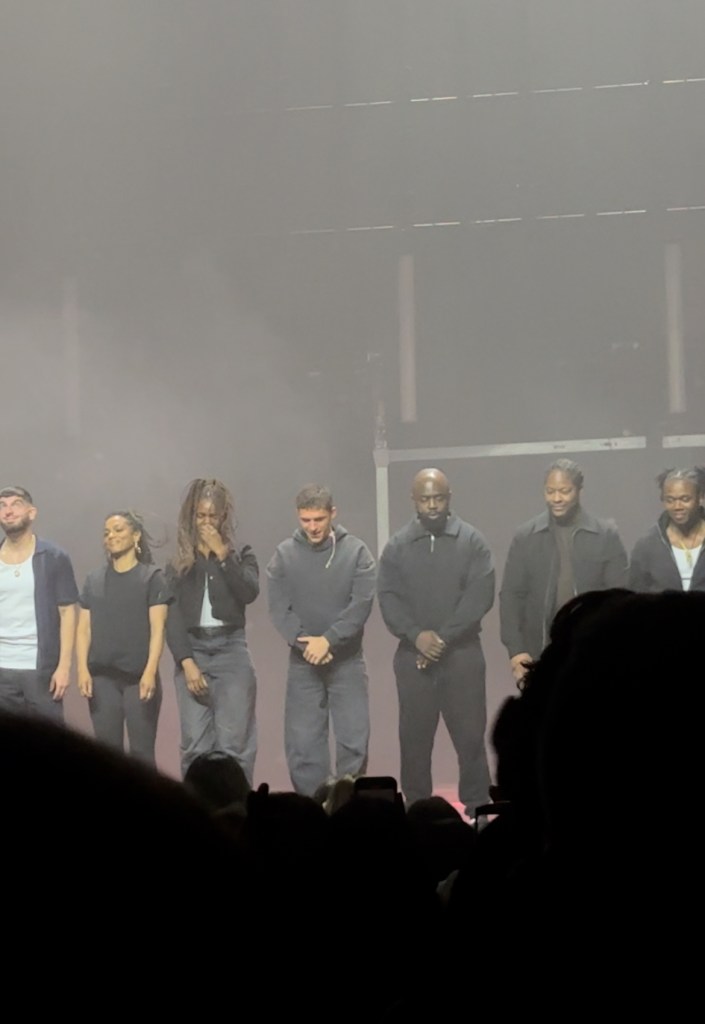
The lights blackout and come up for the final time revealing both Romeo and Juliet laying together on Friar’s lap as he sits, tormented on the ground. He delivers the final monologue of the play as a memorial and a warning, ending the play.
Believe it or not, I still haven’t been able to capture everything I love about this play. Feel free to ask me any more questions you have or details you want to know. Clearly I loved this play and hopefully you can see where I am coming from after reading this lengthy, confusing mess of an essay.
For never was never a story of more whoa than Francesca Amewudah-Rivers as Juliet and Tom Holland and Romeo.
 Theatre in London U of A