Directly accessible from the tube, the Victoria and Albert Museum is full of beautiful collections that will put one in decision paralysis. There are six floors full of history curated over the last two hundred years.
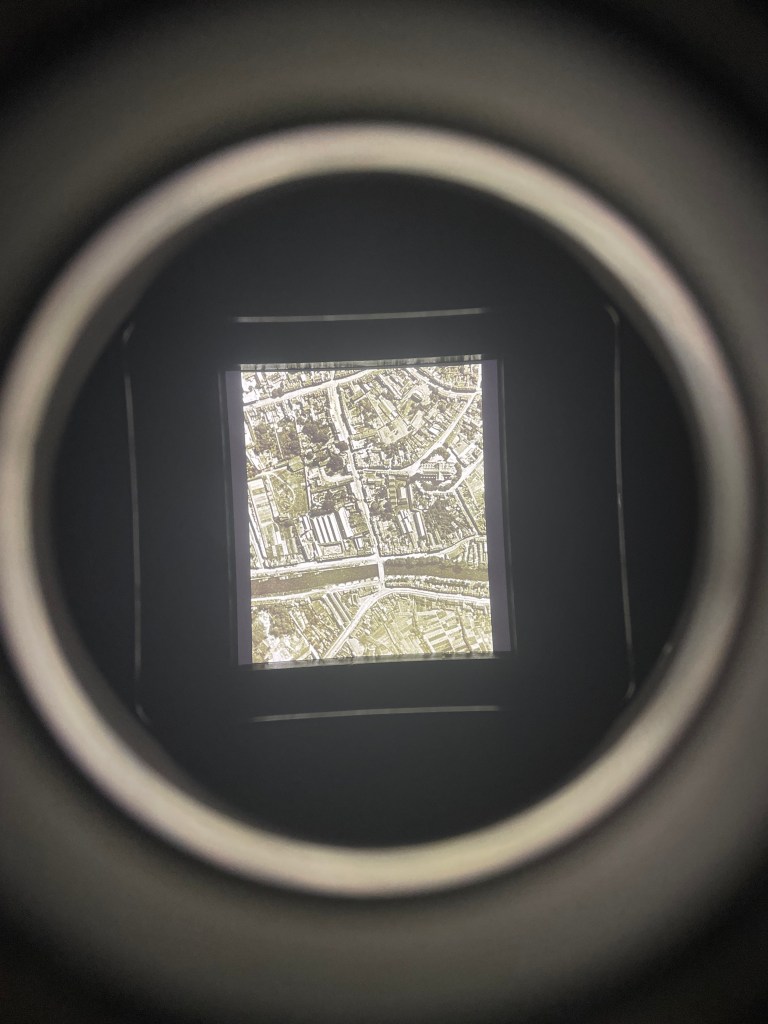
My favorite exhibit was the Photography Centre. There were slides you could flick through using a light table machine. One of the four stations included old aerial shots. It was so cool to see the development of photography from its birth to now all in one room. I was kind of shocked to find an iPhone in a museum! It seems crazy that the popular smartphone debuted sixteen years ago.
I also really enjoyed the Fashion room. The room was circular and featured outfits from the late 18th century; the newest pieces in the collection were from 2016! The inclusion of contemporary clothing as well as the iPhone are good reminders that history is always happening around us. Our lives are just the most recent chapter in the book. It also contextualizes truly how quickly trends change today. The 2016 fashions are quite out of date, but in the 18th century the style did not change for decades. The material used in the 1700s determined who was on trend. Material helped show off wealth. Also, once cotton started being used, the most fashionable in the room was the one in the newest cotton print.
It is interesting that the clothing included from 1905-1915 is dubbed “The Cult of the Kimono”. From this decade, the museum included three women’s clothing items inspired by East Asia. Jim and Jules (partially set pre-WWI), which was set mainly in Paris, manages to reflect this style through how the script is written. There is a worldly philosophy to the play that reflects the taste for East Asian art that was occurring at that time.
Surprisingly, the museum lumps the 1940s, 50s, and 60s all together. To me the 20th century is really when fashion begins to be incredibly distinct each decade. This display showed the trend for perfectly tailored clothes. A men’s suit and three women’s jacket and skirt sets make up the display. This style matches the fit worn in The Mousetrap. The Mousetrap is set in the early 50s and everyone at the guesthouse is buttoned-up in nicely tailored styles. As the show has been playing for 71 years, it serves as a unique time capsule to both theatre styles but also what was once contemporary clothing. The clothing of the period is more elevated than our own day-to-day clothes often are. In many minds, this style has been closely linked to Agatha Christie’s work. I think the styles of her day complement her writing well; a slightly posh outfit lends itself well to mystery, at least to modern audiences.
A fun piece of art that made me smile was a group of three metal lions. I did not pause long enough to do anything more than snap a picture, so I am not sure if they are pewter or silver or something else. Although, actively thinking about the theatre I have seen, I couldn’t help but smile and think of Snug, the joiner, with the non-frightening “rawr” in the play within the play of A Midsummer’s Night’s Dream.

Looking at Shakespeare, all his stories had been told before throughout history with the bard just adding a slightly new spin and creating words. The Neoclassical period of the late 18th century reminded me of this. Shakespeare set plays in ancient Athens (Midsummer) and Ephesus (Comedy of Errors) unwittingly looking back to the classical period over a hundred years before the rest of Europe. There were of course items from Shakespeare’s life. A nice note on the wall mentioned how Elizabeth I set the trends during her reign. One item that showcases finery during Elizabethan England is a lavish bed decked in red and yellow. The color scheme kind of makes me think of Comedy of Errors for some reason. Maybe red and yellow are the comedy due of colors. In London, how can you hear of the “globe” without thinking to the famous theatre? There was a wooden installation called (drum roll please): The Globe. The Globe is by the Cuban art collective Los Carpinteros and serves as a response to the themes associated with the Enlightenment. The shape leaves the structure up to interpretation, but provides an excellent space for conversing between our fellow humans.

Of course, if we are speaking of the connections to plays I have seen, I must mention clocks. There were gorgeous, handcrafted clocks throughout the Europe 1600-1850 collection. Clocks, or more accurately time, are integral to both Benjamin Button and Back to the Future. Both musicals use the phrase, “matter of time” throughout their songs. Clocks are the most tangible symbol we have to consider time so they definitely made me think of these two musicals that are time-centric.
Lastly, shout out to the inclusion of Spitalfields Silk because I’ve been there!
 Theatre in London U of A