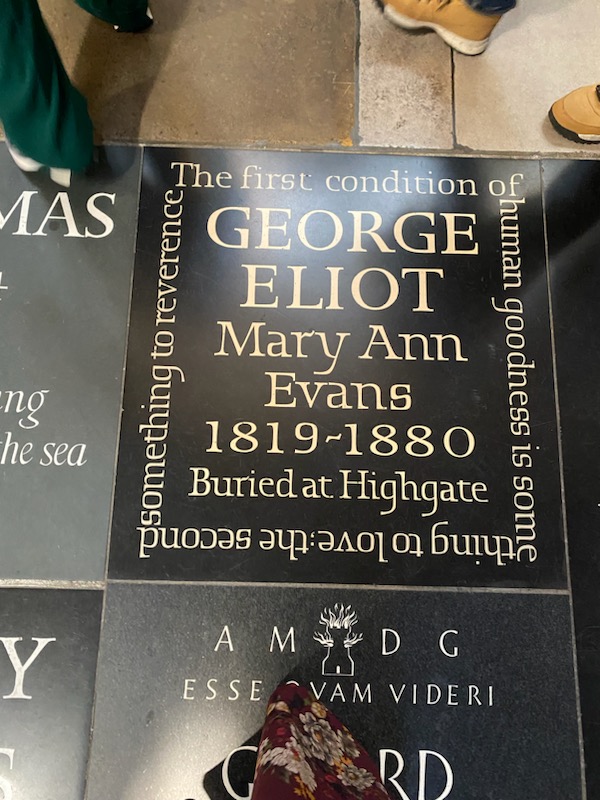
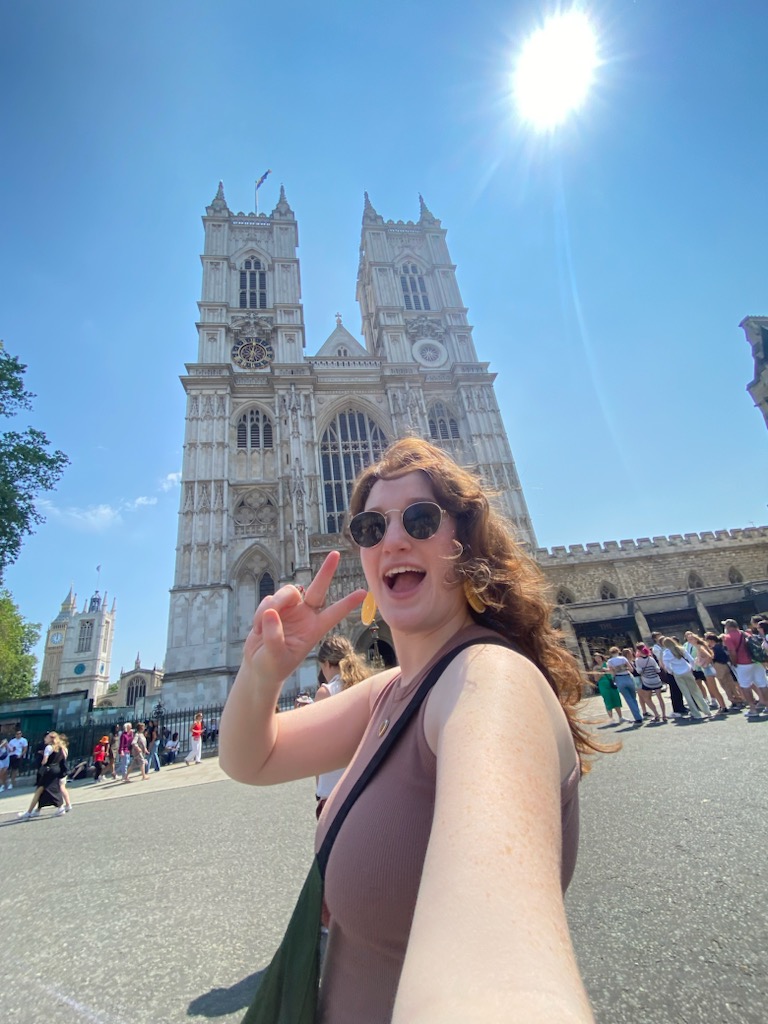

Today we toured Westminster Abbey in which we were told to focus on the graves we walked on and the statues we looked up at. Westminster Abbey was a huge structure that housed a place of worship, a royal wedding venue, the seven-thousand-year-old coronation chair, and over three thousand tombs. The building was surrounded by beautiful stained-glass windows and extremely detailed architecture. There were over a hundred things to look at no matter what room you were in or which angle you were looking at. As I stepped across the uneven stones that made up the floor, I couldn’t help but feel uneasy at how many graves I was walking over. Westminster Abbey housed thousands of well-known memorials for royals, actors, activists, academics, poets, and even commoners. The memorials that caught my eye were those of Nelson Mandela, George Eliot, and Charles Dickens. Mandela is buried in South Africa, but there is a memorial stone in the main room of the Abbey that was put there in 2018 in remembrance of him. It has the words forgiveness and reconciliation surrounding his name to commemorate all of the trials he had to face as an activist leading the apartheid. George Eliot, the pseudonym for popular author Mary Ann Evans had a memorial stone within the Abbey. As one of my favorite authors and an iconic representation of the perils of sexism and the power of women in the 1800s, it was inspiring that she was recognized. Charles Dickens was actually buried in Westminster Abbey in what is called Poets’ Corner. His grave was meaningful to me after growing up surrounded by his literature on all of our bookshelves at home. His name is one of the biggest names in Poets’ Corner and he was buried in Westminster as more of a spectacle for the public. Seeing so many big names and iconic statues all in one beautiful building was so surreal, there wasn’t enough time to look at everything and everyone!
 Theatre in London U of A