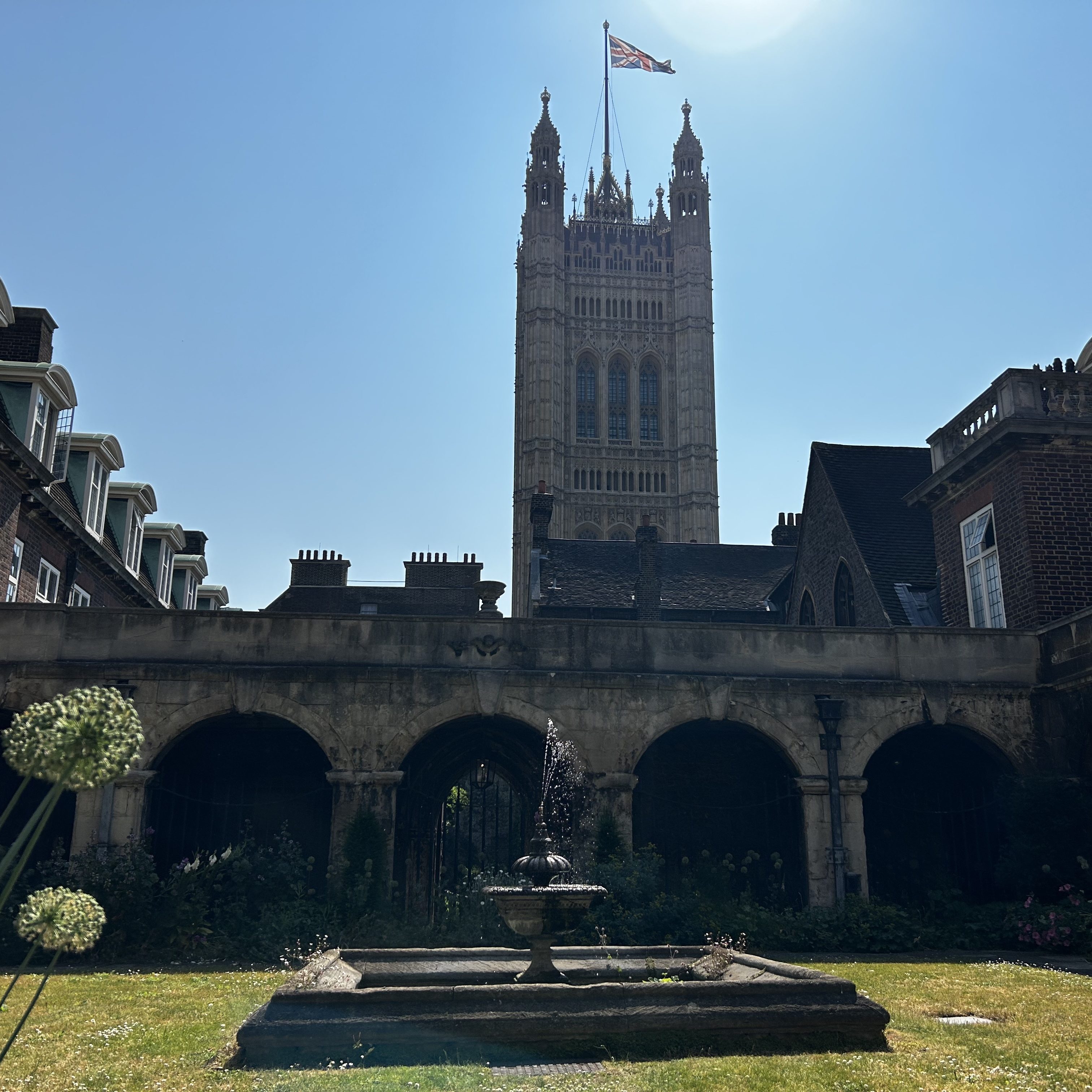
Westminster (also pronounced WestMUNster) Abbey reminded me immensely of St. Paul’s Cathedral. While the architecture on the outside is very different, the graves and inner chapel definitely had similarities.
First off, I am SICK of these British buildings having the graves on the floor. I get so eerie about not stepping on graves, but when there are four or five graves right next to each other in the only available walkway, WHAT AM I SUPPOSED TO DO????
Also, maybe it’s just me, but I personally really don’t like when people walk on graves too. I personally don’t like when people have zero spacial awareness, so maybe that’s more what I’m talking about. But all today, there were so many people just galavanting over these graves and “headstones” (not sure if that’s the proper term for these). There were people just being plain dumb dumbs in the actual tombs of the more important figures too. In Elizabeth and Mary’s tomb, there was a plaque on the floor directly in front of the structure of their grave and some woman just decided to stand directly on the plaque in front of the grave… No care in the world and paying no mind to the people that are being ushered around her. And not to be that person, because I prefer real life experience over pictures, but her standing right there gave me NO CLEAR SHOT for a picture to show my friends and family back home. I HAVE A PHOTO ALBUM TO CREATE MISS.
The world is FULL of women in chevron dresses and I’m at my LIMIT.
Whew, anyway. Aside from the floor graves and frustrating patrons, I was very shocked to learn about some of the more popular names that were buried and not buried in Westminster Abbey. Winston Churchill isn’t buried in the Abbey as he specifically requested not to be buried in the same location as many people he “would not care to have tea with.” So, instead, a memorial plaque is placed on the ground near the grave sight of the unknown British soldier. That grave was also very interesting. A black plaque surrounded by poppies is the only grave that is forbidden to be stepped on. The Dean of Westminster came across a wooden cross marking the grave of an unknown soldier after the great war in France. He then decided to unbury the body and create a memorial for all the soldiers who were unidentified and allow them all to be honored among other great names like Isaac Newton, Thomas Hardy, and previous royalty. The slab’s text is made from shell casings from the war; the grave is buried in French soil, while the slab is made of black marble from Germany. I think it is very honorable that these soldiers have so much respect shown towards them that there was so much care taken for their grave even now. Every tour guide I overheard mentioned how important it was to “not fall onto this grave.”
One other interesting thing about the Abbey is how there are many “graves” to honor specific people, but many of the people listed aren’t buried in the Abbey. There’s a whole corner of the Abbey called “poets corner” where many famous names in literature are buried or memorialized. The Bronte sisters, Jane Austen, Thomas Hardy, William Shakespeare, and even Charles Dickens appeared in this corner. But, Charles Dickens’ grave is more complicated than most others.
When Dickens died, there was a lot of discourse about whether or not he should be buried in Westminster Abbey. The main reason for this being that many people didn’t agree with his proposition about evolution. It was a newer idea and rejected the ideas and teachings of the church.
While I was preoccupied trying not to step on anyone’s graves, I still very much enjoyed the visit to Westminster Abbey. I just wish I could talk to whoever thought “graveyard” didn’t mean graves in a yard.
 Theatre in London U of A