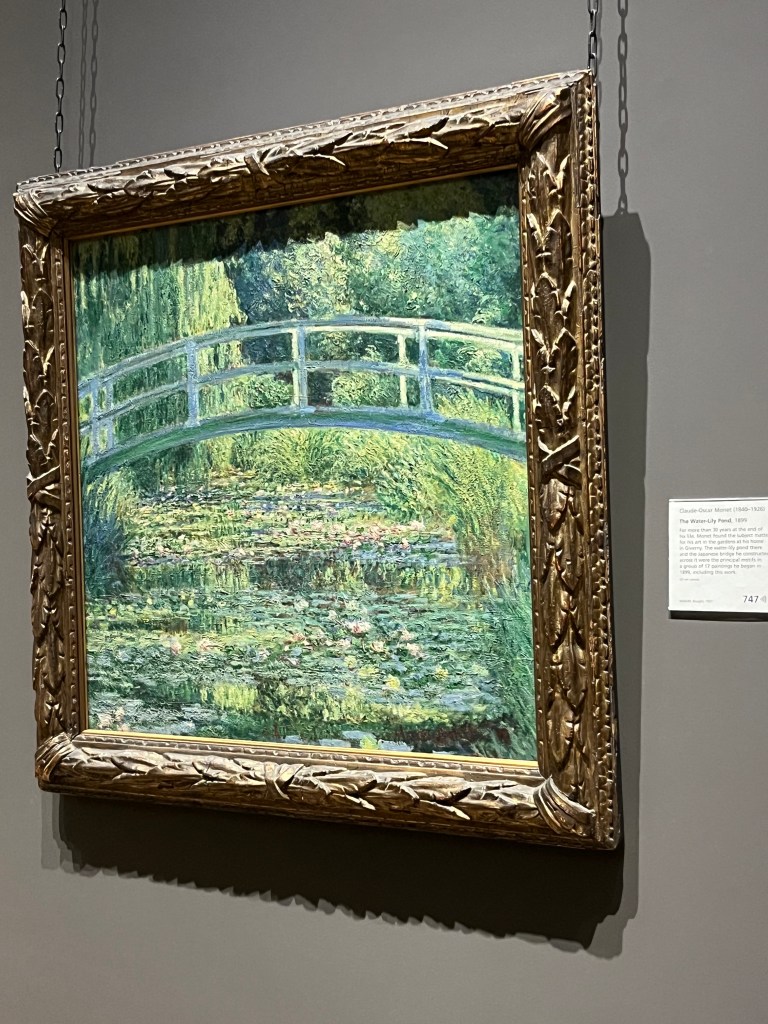
The National Gallery was maybe my least favorite museum we have been to thus far. I think it is the idea that so many similar paintings that all stand next to one another lessen the effect of some of these beautiful masterpieces. Seeing a room filled with only oil paintings makes pieces like Sunflowers by Van Gogh look less intriguing. And that saddened me a bit because I wanted to be so emotionally pulled by the art and that did not happen for me this museum go- around. My most favorite classic painting I think ever is The Water- Lily Pond by Claude- Oscar Monet. I am a woman of the water and seeing the way in which he has sculpted the dimension of the pond makes my heart flutter. The weeping willows to the left side of the painting are probably some of the most beautiful leaves I have ever seen created with oil. The embankment to the right of the painting with the tall grass sweeping over the water is created in a way that looks like wind is flowing over the water. I loveeee this aspect of the painting. Seeing the effects of the wind brings this piece of art to life along with the reflections in the water. The dimension and life Monet can create in his work inspires me as an actor. You can be given a blank canvas (character) and you are the one with the responsibility to breathe life into it and I believe Monet is a master at this.
The second painting I loved seeing in the National Gallery was The Horse Fair by Rosa Bonheur. This painting is almost thirty years older than Monet’s Water Lily- Pond and although both are used with oil paints the technique used by each artist is vastly different. In The Horse Fair Rosa utilizes emotion in almost every stroke. Even the grains of soil at the bottom of the painting are brought to life with visceral emotion by the dust storms the horses and people create. Both paintings use motion to bring about the scenic story. The horses, although stagnant in the paint; you can read the story of a stampede vividly by the brush strokes and imagery Bonheur uses. The biggest difference between these two paintings is the use of still life versus real life. Bonheur depicts motion with people and horses while Monet replicates motion with distorted leaves and water.
Another similarity between the two is the artist’s use of reflection from the water/the ground. Creating reflection in canvas painting is incredibly difficult to do; specifically with oil paints. Oil can easily become muddy and without an exact idea of what shapes you want to create, creating these vignettes must be done by a skillful hand. I find it interesting these artists have completely unique styles of painting while using the same ingredients: canvas and oil paints. Monet uses impressionism to create his worlds. I highly doubt the Japanese garden bridge he constructed in real life was evident with such greens and blues, but in actuality brown or grey. Monet uses his colors to tell his own story while Bonheur paints realistically and wishes to capture the scene before her in strict detail. But as I said before, both utilize reflections in their work similarly. To show what is there and what can be beyond. Monet’s reflections imitate the lilies and grass in a way that make the 93 x 74 cm frame seem much deeper and larger vertically. Bonheur does the same, but her reflections and shadow make her painting look deeper horizontally, like if you step inside her painting you could travel for miles before reaching the end.


 Theatre in London U of A
Wonderful observation about the use of reflection in the two paintings!
LikeLike