Victoria & Albert Museum – Theatre Exhibition
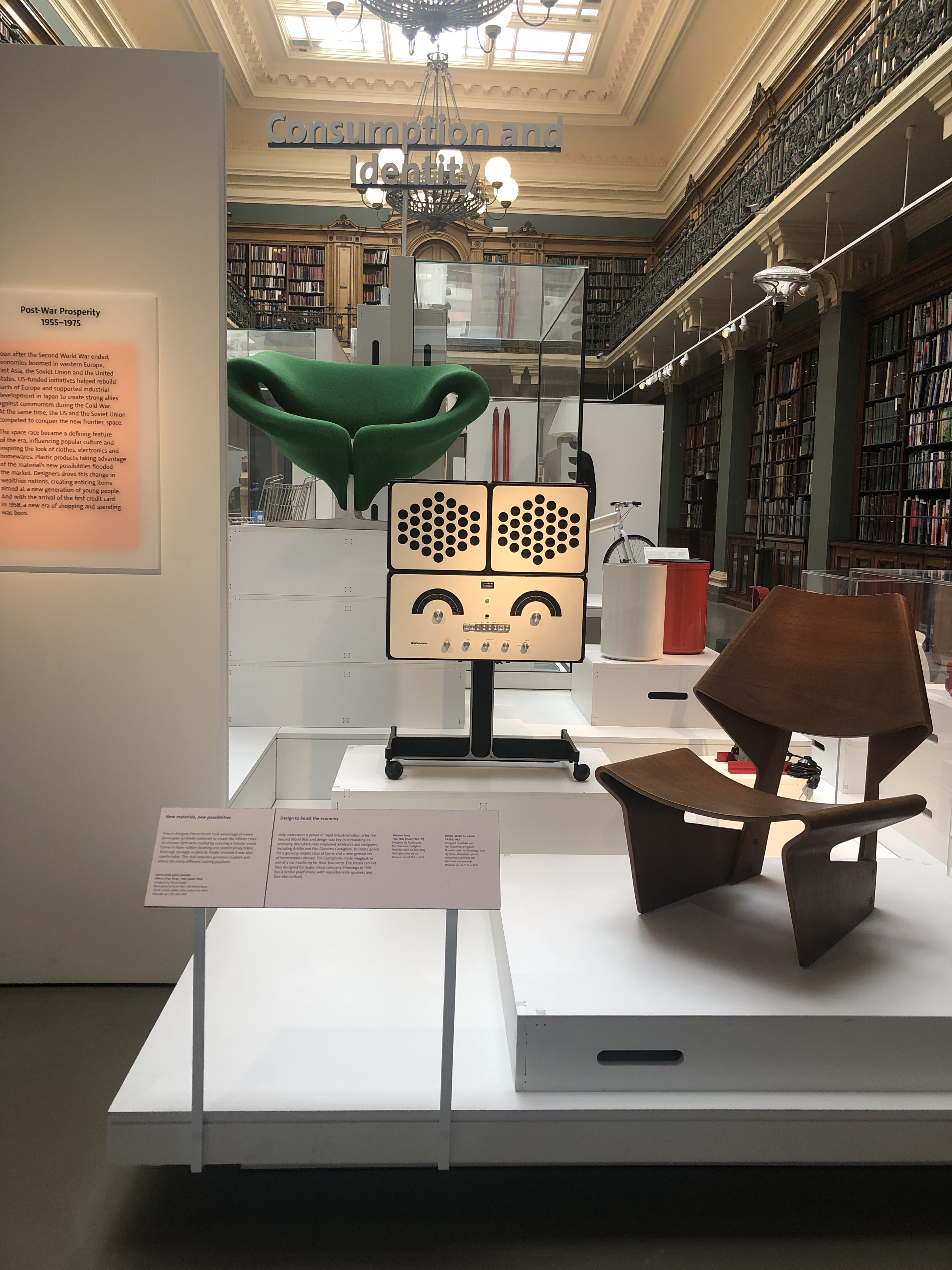
Our visit to the Victoria & Albert Museum was a little overwhelming, to be honest. Although I’m not the most attentive museumgoer (I don’t stop to read every plaque or examine every piece) I do generally like to take in every room and feel that I haven’t missed anything that might interest me. This was a fundamental problem on this visit because this place is immense and has no determined circulation pattern; it’s totally on you to find your way. After visiting the theatre exhibit, I gave it my best shot, but was fully overwhelmed by the many exhibits, directions and floors. After an hour and a half or so, I had to call it simply so that I stopped worrying about what I wasn’t seeing. This feels kind of silly in retrospect, but I’ll stick to my guns and say that it was the right choice in the moment. My silver lining is that I did manage to take in the “Design: 1900-Present” Exhibit, which had some furniture pieces that piqued my interest and I’ll be researching further down the line.
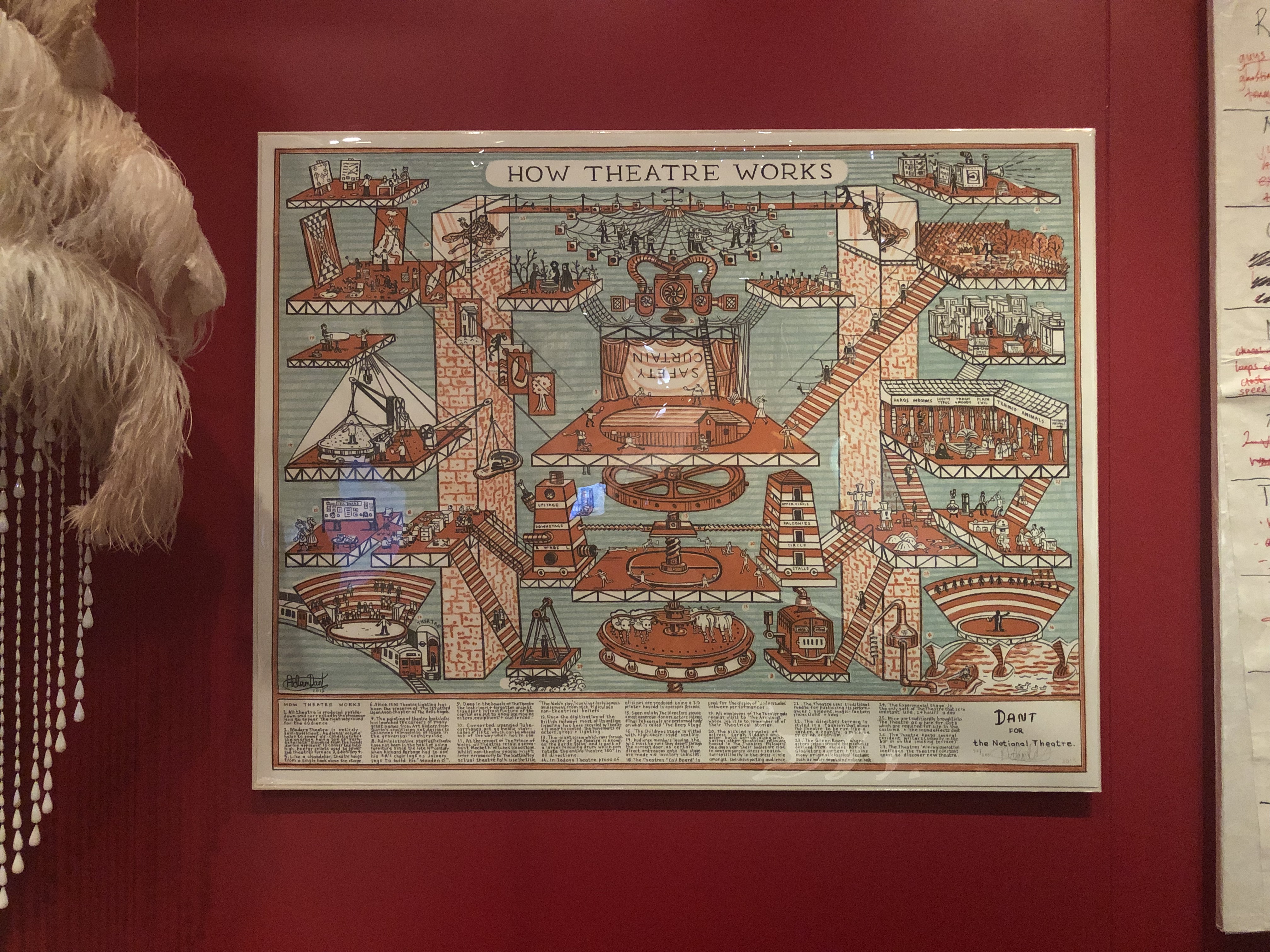
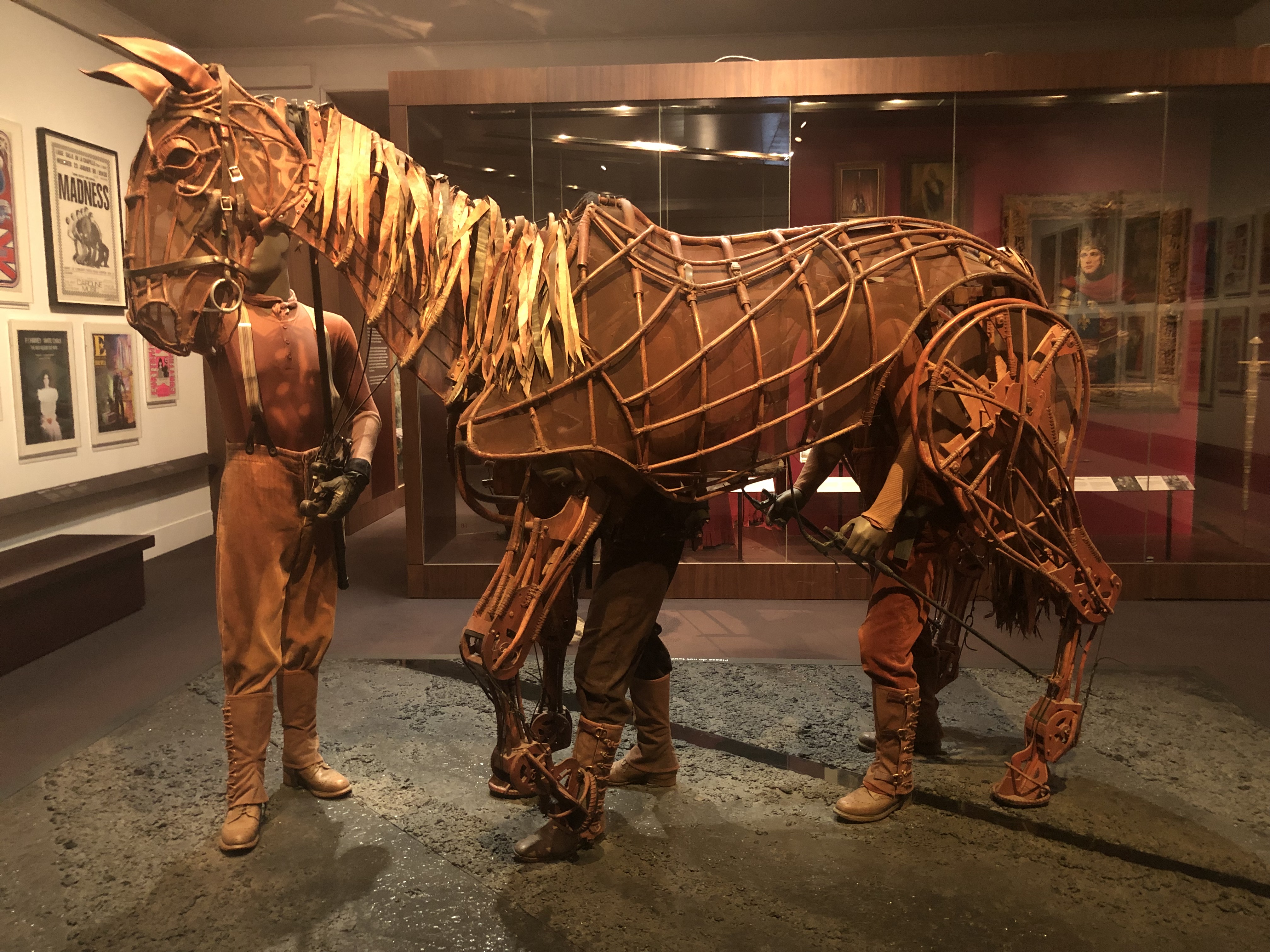
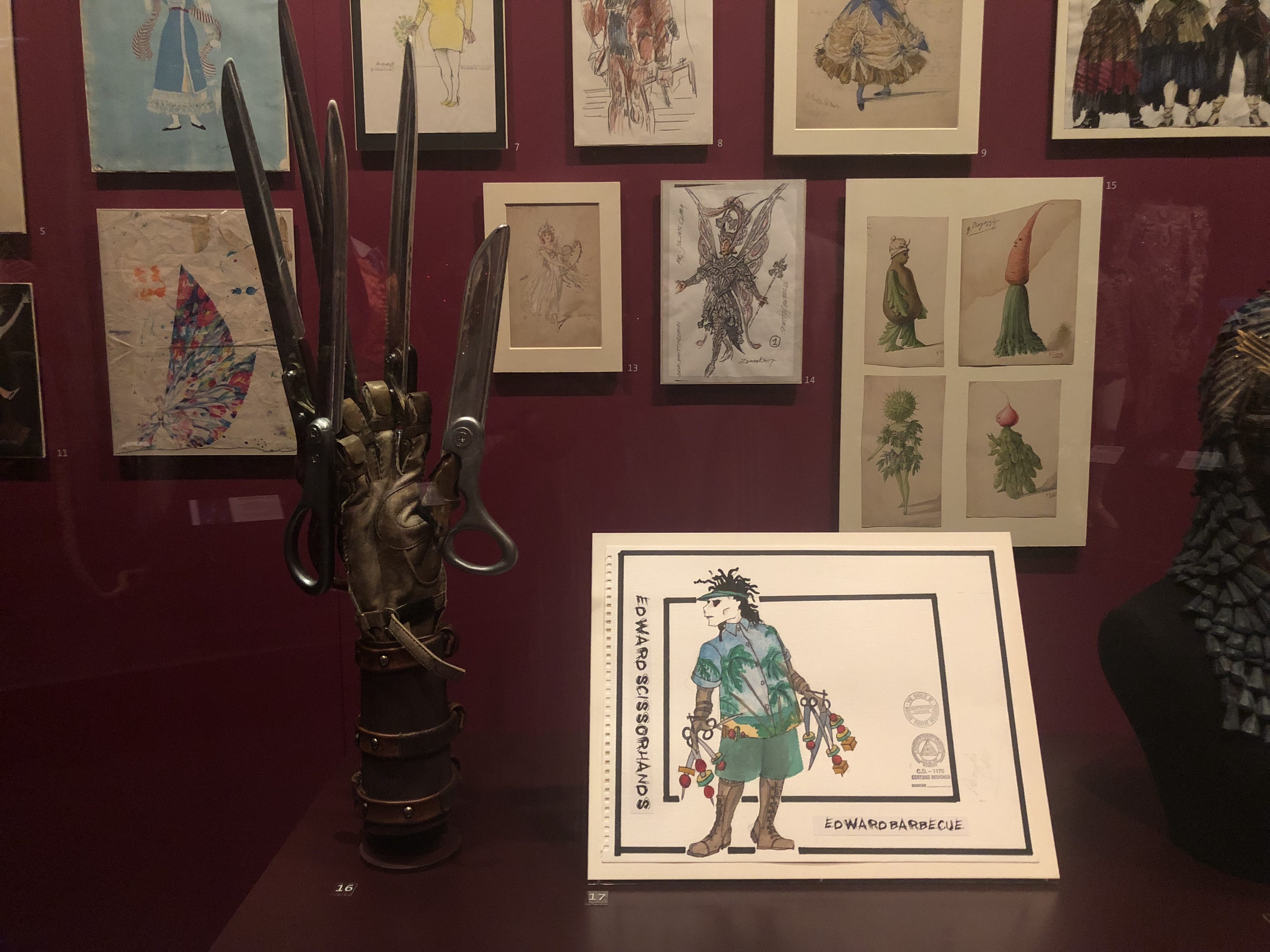
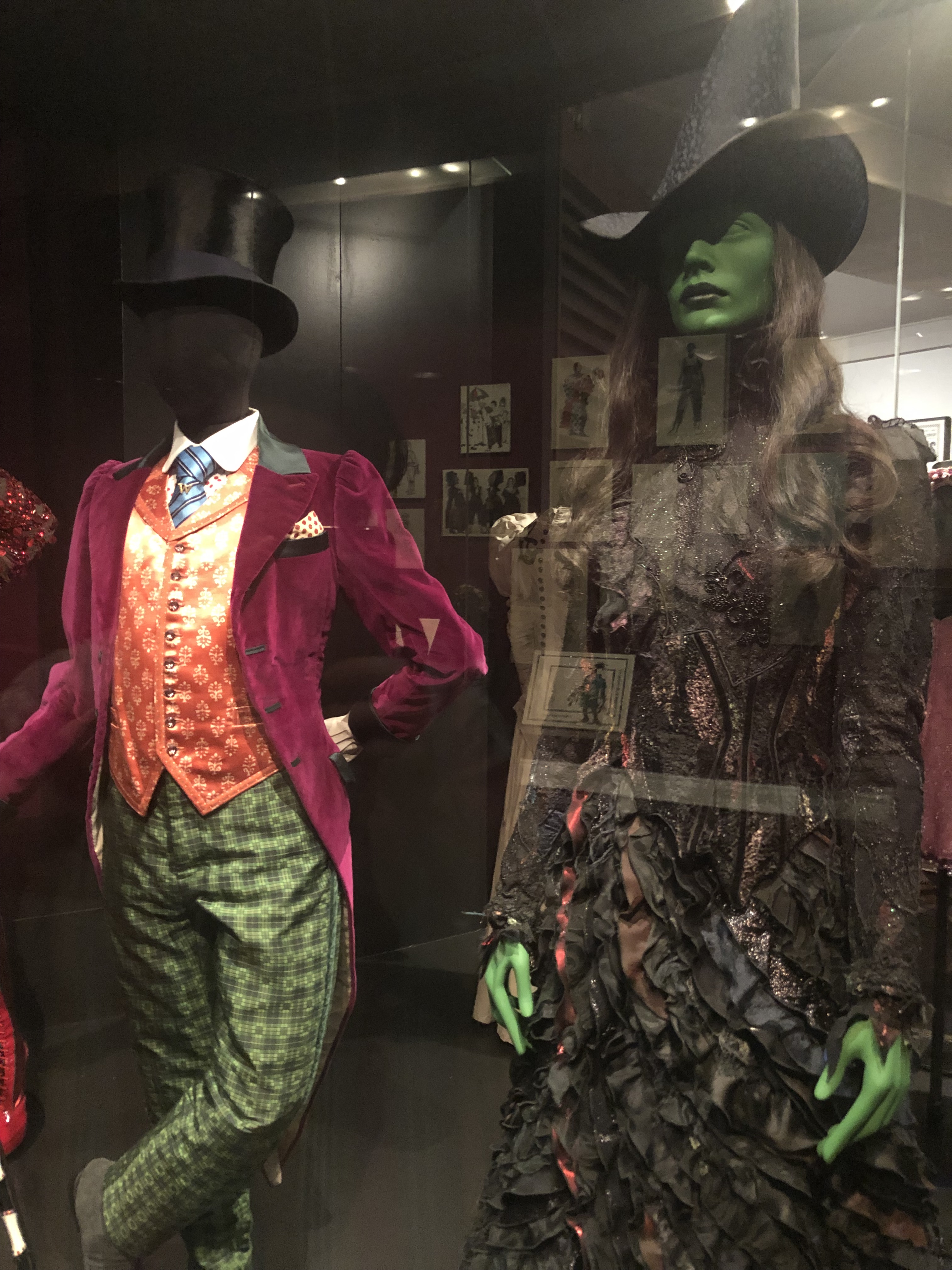
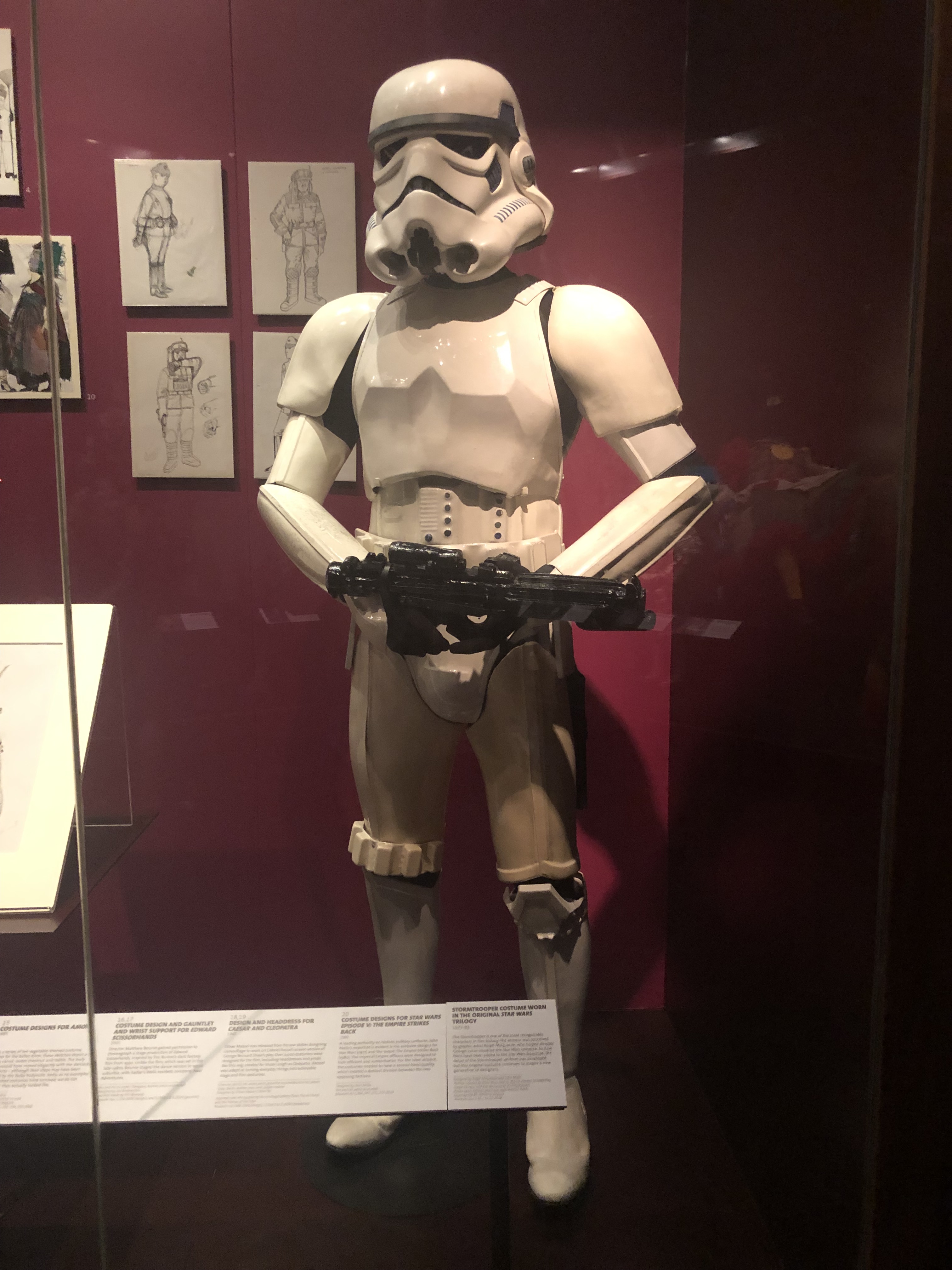
The central purpose of our visit was to visit their exhibition on theatrical design, which took the visitor through years of costuming and set designs, some even from the world of film rather than theatre. It was an expansive look at the way the art form has been elevated as a result of technical achievement and the translation of content “from page to stage.” There were some really great highlights in here, including Elpheba’s witch garb from my favorite musical, Wicked, and Edward Scissorhands’s glove from the stage adaptation of the Tim Burton classic. See the included images for more high points.
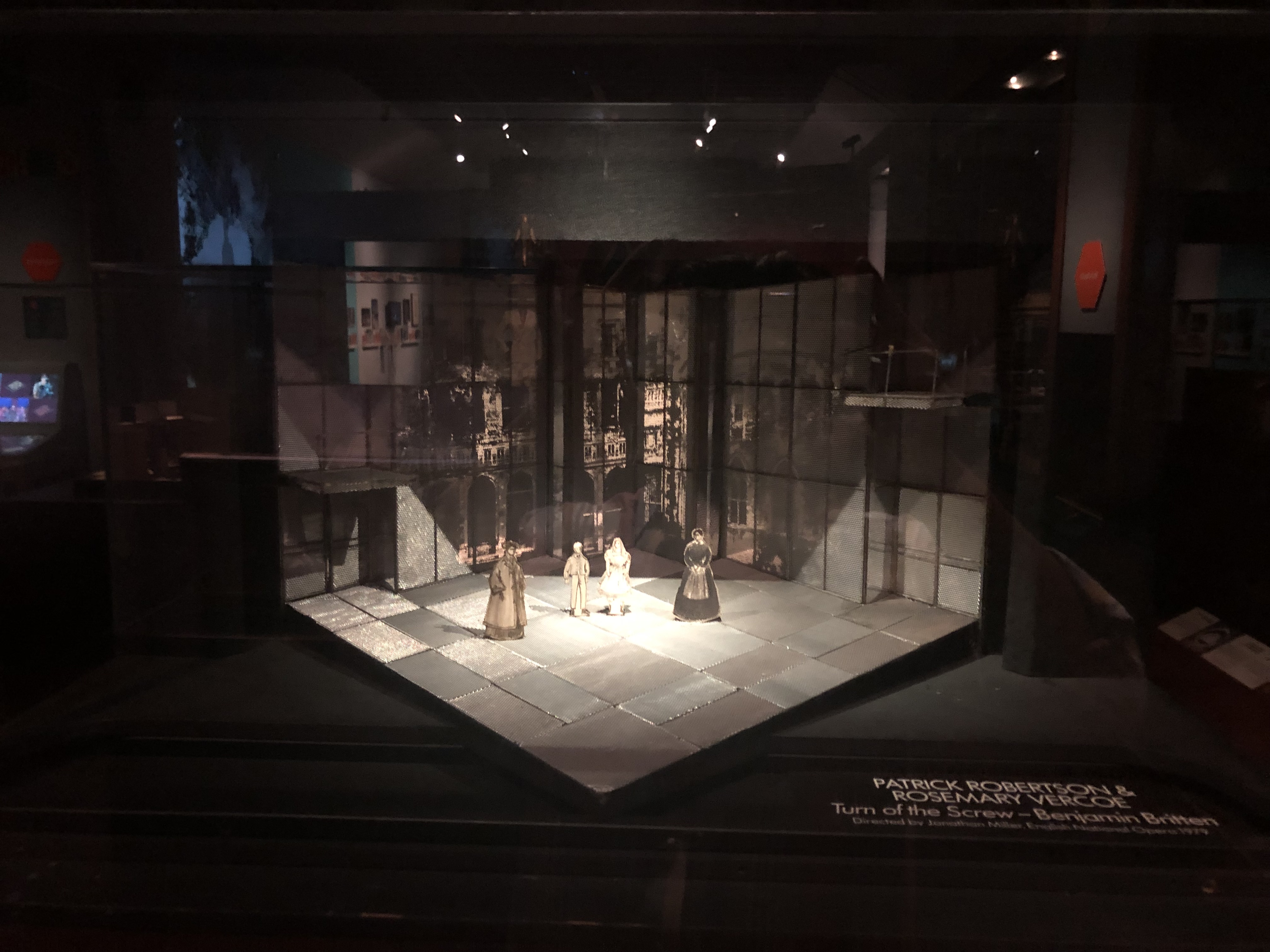
A particular set model caught my eye, from the 1979 staging of The Turning of the Screw. I’m a big fan of this story, which one of my favorite directors, Mike Flanagan, adapted into the masterful horror series The Haunting of Bly Manor. As I read about the set, I was taken with the way the floor employed forced perspective to create artificial distance between the audience and the back of the set. Furthermore, a series of screens and scrims with ghosted projections of the walls of the manor worked to create the feeling of a sprawling, expansive and mysterious estate, supporting the undertones of dread and fear of the unknown that punctuate the story. The hazy and slightly unclear atmosphere reminded me of The Glass Menagerie, and represent fairly well what that show could have achieved with the right creative direction. With a combination of transparency and projections, I believe a set like this which called focus to center stage rather than the wings, along with a background which established tone and underscored central themes instead of singular moments could have done the Tennessee Williams classic more justice.
This was, overall, a great survey of the sometimes lesser-appreciated sides of theatre which support the actors. I felt it was a due celebration of the achievements of those that work behind the scenes to bring the action to life in subtler technical ways, constantly pushing theatre to new heights.
[now playing: The Skull Beneath the Skin – Megadeth]

 Theatre in London U of A